
You’re looking for the highest quality and most user-friendly FPV motor that delivers a tangible difference in the air, not just on paper?Then you’ve come to the right place.
I’ve burned through countless sets of motors from big-name brands and budget offerings alike. Some were screamers that ran scorching hot, others were durable but felt vague and unresponsive. The constant challenge is finding a motor that doesn’t force you to compromise. That’s the pain point, isn’t it? We’re tired of compromising. We want it all.
I’d like to recommend it to you DolphinRC SkyRend 2207 Motor. The citing materials and construction techniques usually reserved for motors in a much higher price bracket (well over $25 a piece).
Let’s find out if this 2207 brushless motor is really worth buying and see whether it’s the one you’ve been waiting for.
First Impressions
Right out of the box, the SkyRend 2207 makes a statement. In a world of single-color, cookie-cutter motor bells, the dual-color oxidation and precision machining immediately stand out. This isn’t just for looks; it speaks to a level of attention to detail that often correlates with performance.

Running my fingers over the 6061 aluminum outer rotor, I could feel the quality. There were no sharp edges or machining marks. Spinning the bell by hand, the first thing I noticed was the complete absence of play and the silky-smooth rotation, punctuated by the satisfying clicks of strong magnets. This is thanks to the genuine NSK684 bearings inside—a component where many manufacturers cut corners. Cheap bearings are a pilot’s nightmare, leading to vibrations, noise, and premature failure. Seeing NSK bearings here was my first sign that DolphinRC wasn’t messing around.
Another detail that caught my eye was the base. It’s made from 7075 high-strength aluminum alloy, which is significantly stronger than the 6061 aluminum often used for the entire motor. This is a critical design choice. The base is where the motor mounts to your frame and takes the brunt of the impact in a crash. Using a stronger material here is a deliberate engineering decision focused on durability.
They even include a set of standard shock-absorbing rubber rings. While some might see this as a small accessory, I see it as a company that understands the nuances of FPV. These little rings sit between the motor and the carbon fiber arm, helping to dampen high-frequency vibrations that can plague your gyro and complicate your tune. It’s a thoughtful touch that shows they’re thinking about the entire flight experience.
What Makes This 2207 Motor Special?
A motor can look great on the outside, but it’s the guts that determine how it performs when you’re punching out over a treetop or threading a tight gap. This is where the SkyRend 2207 truly separates itself from the pack.
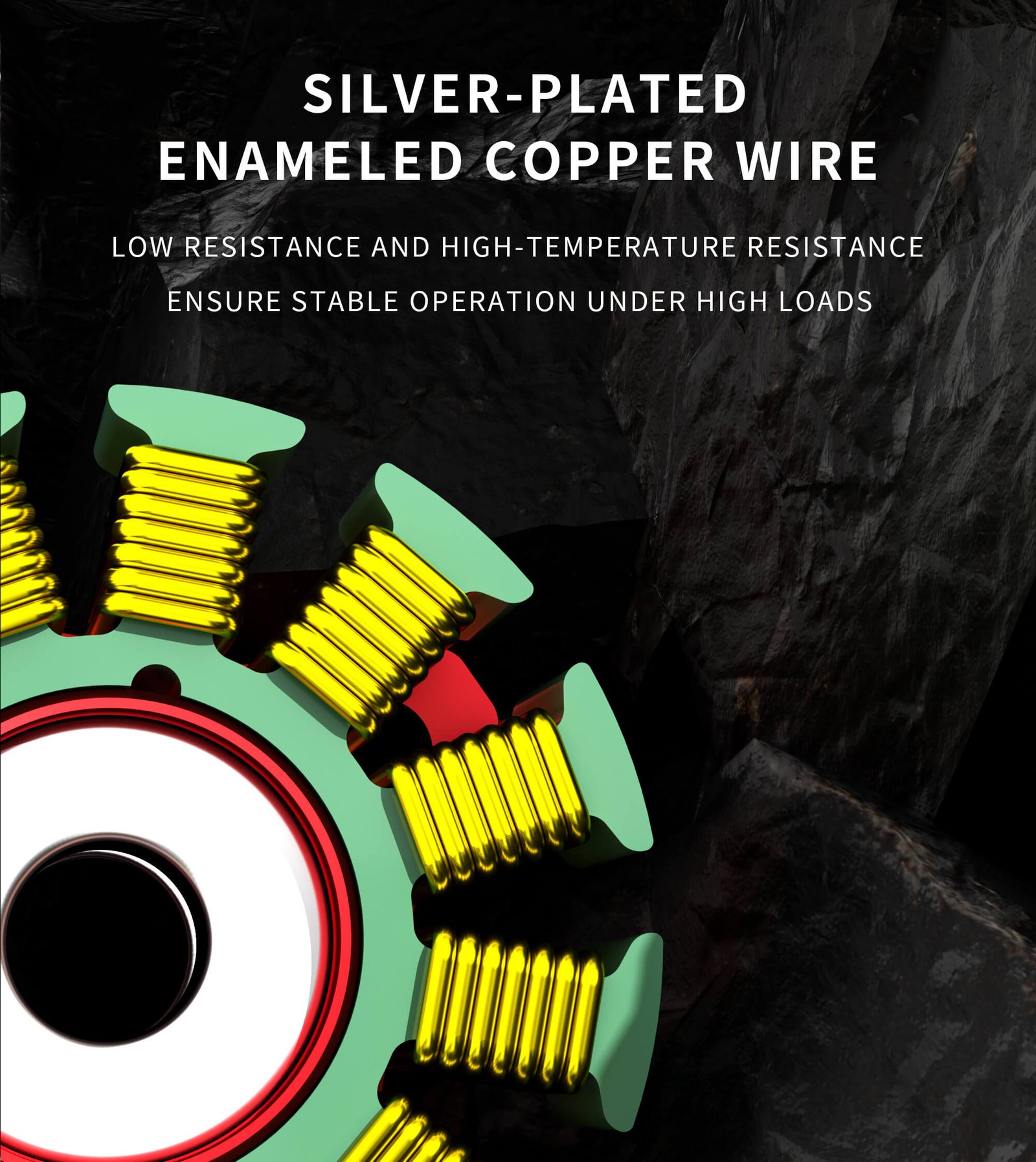
- Silver-Plated Pure Copper Windings: This is the headline feature for me, and it’s a genuine game-changer. In the FPV industry, silver-plated windings are exceptionally rare, especially in this price range. Why does it matter? Silver has lower electrical resistance than copper. This means less energy is wasted as heat, resulting in higher efficiency. For a pilot, this translates to tangible benefits:
- More “Pop”: The motor can draw current more easily, giving you a sharper, more immediate response to throttle inputs.
- Less Voltage Sag: Your battery holds its voltage better under high load, meaning you have more consistent power throughout the flight, not just in the first 30 seconds.
- Cooler Operation: Less wasted energy means less heat. These motors run noticeably cooler than many of my previous sets, even after a full-send pack.
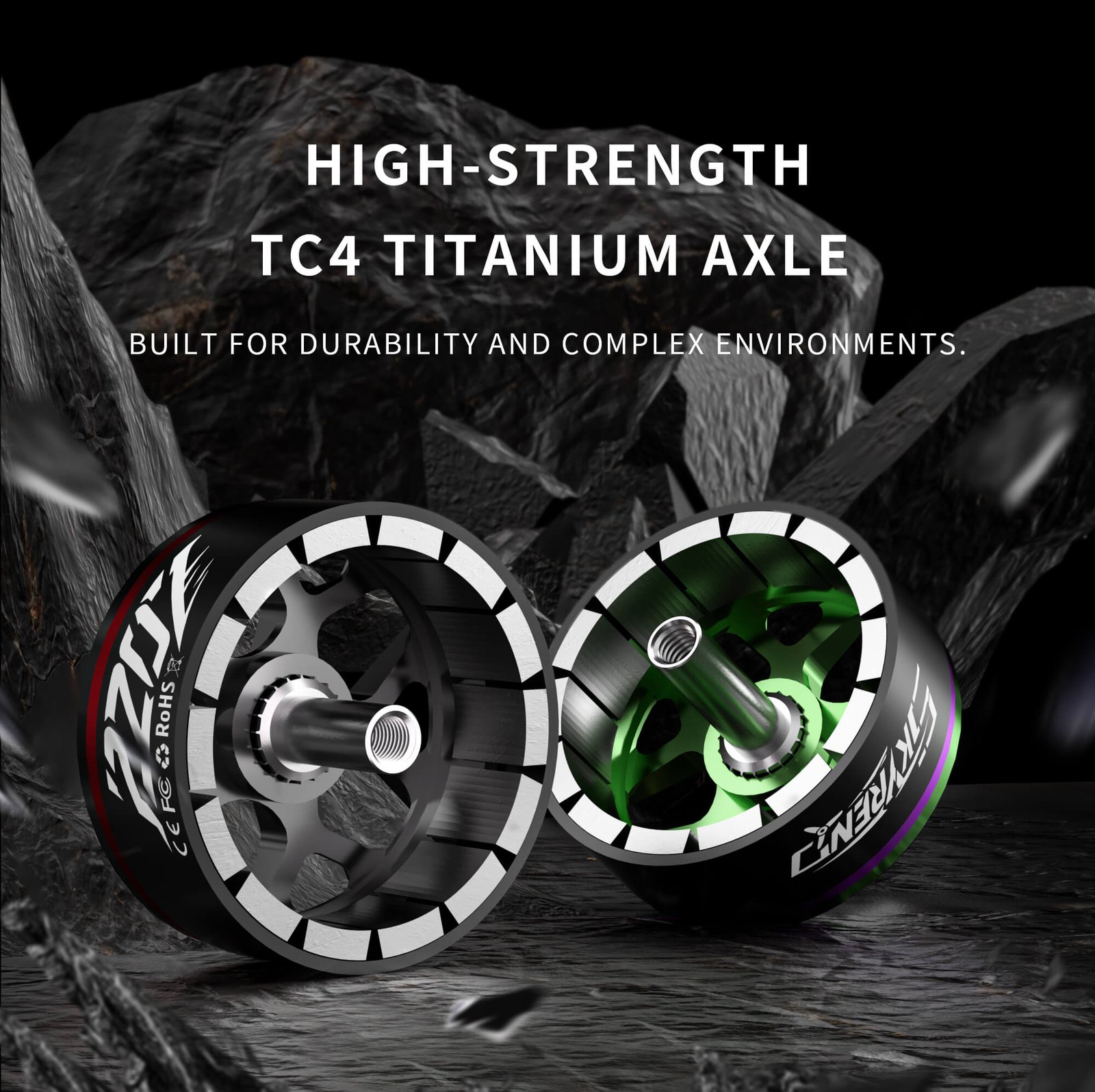
- TC4 Titanium Alloy Shaft: I’ve lost count of the number of flight sessions ended by a bent motor shaft after a relatively minor crash. The SkyRend 2207 uses a solid TC4 titanium alloy shaft. This material has an incredible strength-to-weight ratio, making it far more resistant to bending and deformation than the steel shafts found in most motors. This is your insurance policy against hard impacts.
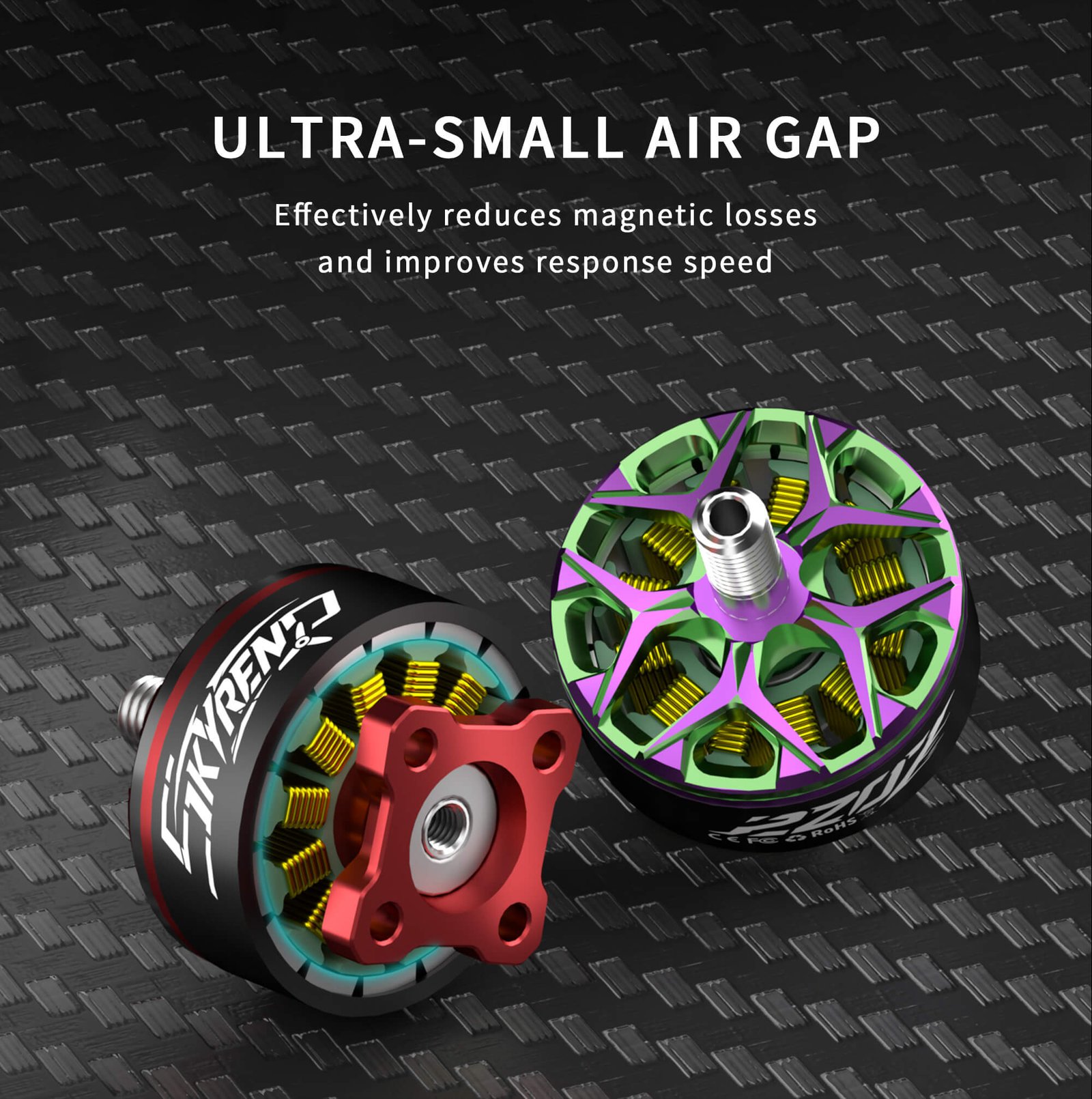
- N55SH Arc Magnets & A Tiny Air Gap: The heart of a brushless motor is the interaction between its magnets and windings. The SkyRend 2207 uses high-performance N55SH arc-shaped magnets. The “SH” rating means they can withstand higher temperatures without losing their magnetic properties—perfect for demanding 2207 6s quad motors. The arc shape allows them to sit closer to the stator, and DolphinRC has engineered an ultra-small 0.1mm air gap. In simple terms: stronger magnets + a tighter gap = more magnetic flux. This results in immense torque and lightning-fast response times. It’s what gives you that “locked-in” feeling, where the quad feels like a direct extension of your thumbs.
This isn’t just a list of specs; it’s a recipe for a premium flight experience. It’s the kind of engineering I expect from a motor twice the price.
Finding Your Flow: 1950KV vs. 2100KV
Choosing the right KV is crucial, as it defines the character of your quad. The SkyRend 2207 comes in two excellent options for 6S pilots, and the choice depends entirely on your flying style.
- 1950KV For Freestyle I see this as the ultimate freestyle and all-around workhorse. The lower KV provides an incredibly smooth and linear throttle response that gives you surgical precision. It’s perfect for technical flying in bandos, flowing cinematic lines, or any situation where throttle control is paramount. It’s also more efficient, giving you slightly longer flight times and being a bit gentler on your LiPos. If you value control and a connected, intuitive feel over raw, blistering top speed, the 1950KV is your motor.
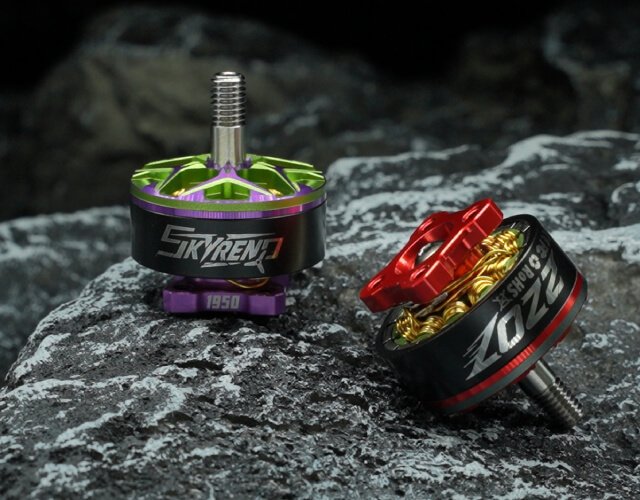
- 2100KV For Racing This is the choice for pilots who crave power and speed. The 2100KV variant has a more aggressive top end and delivers an explosive punch-out that will leave you grinning. It’s ideal for racing, extreme freestyle with massive power loops and hangtime tricks, or for anyone who just loves the feeling of overwhelming power on tap. While it draws more current and is slightly less efficient than its 1950KV sibling, the performance payoff is immense. If you want to feel your quad leap into the sky, this is the one.
My personal preference leans towards the 1950KV for my daily freestyle flying, but I have a quad built with the 2100KV for those days when I just want to tear a hole in the sky. You can’t go wrong with either; just be honest about what you want from your quad.
The Performance of the 2207 motor
Talk is cheap. Let’s look at the hard data.
DolphinRC SkyRend 2207 1950KV Thrust Data

The Gemfan 51466 V2 stands out as the powerhouse. It generates the most thrust at full throttle with a massive 1891g, giving your quad an explosive, powerful feel perfect for aggressive freestyle. Interestingly, it’s also the most efficient prop when just cruising at 50% throttle, boasting an incredible 4.150 G/W, but be warned, its peak power comes at the cost of being the thirstiest on your battery, drawing 45.0A. Next, the HQ Prop R29V3 presents itself as the balanced all-rounder. It’s the reliable middle ground, producing a solid 1823g of thrust with a more moderate 43.1A current draw, offering a predictable and controlled flight experience with plenty of power for everyday freestyle without overly stressing your components.
Finally, the Gemfan Yuki 5129 is the smooth and efficient cruiser. It produces the least thrust at 1720g but also draws the least current at 41.7A, making it the kindest to your batteries and likely providing the longest flight times. This prop will give your quad a smoother, more “floaty” character, ideal for cinematic lines or technical flying where precision trumps raw force. This data proves the 1950KV motor is a highly versatile performer, all depending on your prop choice.
DolphinRC SkyRend 2207 2100KV Thrust Data

Now this is where things get wild. The 2100KV motor is an absolute powerhouse. Paired with the HQ Prop J33, it churns out a staggering 2456g of thrust at 100% throttle. The power is undeniable. As expected, this comes at the cost of higher current draw (39.9A) and lower overall efficiency compared to the 1950KV. The HQ Prop R29V3 is another monster combo, pushing almost 2.4kg of thrust. These numbers confirm what you feel in the air: the 2100KV is a beast designed for maximum performance. If you’re building a lightweight racer or a freestyle rocket, this is your ticket.
Data Takeaway: These bench tests prove that both motors are top-tier performers. The data also serves as a fantastic guide for prop pairing. For the 1950KV, the HQ Prop J33 seems to be the perfect balance of power and efficiency. For the 2100KV, both the J33 and R29V3 are excellent choices for unleashing its full potential, depending on whether you want a touch more control or all-out thrust.
Feedback From Actual Flight Tests
Data is one thing, but the feel in the air is everything. I’ve been flying both the 1950KV and 2100KV versions of the SkyRend 2207 Motor on my primary 5-inch freestyle quads for over 50 packs each.
My experience echoes the feedback from other pilots who have had a chance to test them. The word that keeps coming to mind is “smooth.” The power delivery is incredibly progressive and linear. There are no sudden jolts or weird oscillations; the throttle just feels like a clean, direct connection to the props. This smoothness makes tuning a dream. On my Betaflight tune, I was able to push my D gains higher than usual without generating excess heat, resulting in a ridiculously locked-in feel with minimal propwash.
And about the heat—or lack thereof. Even after a hard pack of aggressive freestyle with lots of full-throttle punches and sharp direction changes, the motors come down just warm to the touch. The silver-plated windings and efficient design are clearly doing their job, keeping temperatures in check. Hot motors are inefficient motors, and they’re a sign of impending failure. These run cool and confident.
But the most impressive part for me has been the durability. I’m not a perfect pilot. I crash. I’ve put these motors through some heavy impacts—failed power loops into hard ground, gate clips at full speed, and a particularly nasty encounter with a concrete pillar. I’ve collected some scratches on the bells, but that’s it. No bent shafts, no seized bearings, no desyncs. They just keep flying, pack after pack. That kind of reliability gives me the confidence to push my limits, knowing my gear can take the abuse. This is, without a doubt, a motor built by pilots, for pilots.
Conclusion
After extensive testing, I can say this with confidence: the DolphinRC SkyRend 2207 doesn’t just compete in its price category; it completely redefines the level of quality and performance you should expect from it.
You get materials and features—the silver-plated windings, TC4 titanium shaft, N55SH magnets, and NSK bearings—that are typically found on motors costing $30 or more. You get a flight performance that is exceptionally smooth, powerful, and responsive. And you get proven, real-world durability that can withstand the rigors of FPV.
This isn’t just another generic 2207 motor. It’s a meticulously engineered piece of equipment that delivers on its promises. It strikes the perfect balance between cutting-edge performance and session-ending toughness.
So, to answer the question: yes, I believe this is hands-down the best 2207 motor you can buy for under $25. It has earned a permanent place on my primary builds.
Your next favorite motor is waiting. See the specs and choose your KV on the official DolphinRC page.