
As an FPV pilot, I’ve learned one lesson the hard way, probably more times than I care to admit: your flight is only as good as your link.
You can have the most powerful motors, the stickiest ESC tune, and the most advanced flight controller, but if your video signal turns to a blizzard of static the moment you fly behind a single, leafy tree, you’re not flying; you’re just waiting to crash.
After three years and hundreds of packs, my pursuit of a perfect, rock-solid video link has led me to test, break, and re-test just about every type of antenna on the market. This journey—this obsession, really—is what brought me to this point. If you’re searching for a lumenier fpv antenna, you’re in the right place. You’re not just looking for a product; you’re looking for clarity, reliability, and an edge.
What you really want to know is: which one is actually the best? Which one won’t fail me when I’m pulling out of a dive, or skimming a ridgeline miles from home?
The truth? The “best” one is a myth.
The best one is the one that’s perfectly matched to your mission. And that’s what I’m here to share. This isn’t a spec-sheet recap. This is my hard-won, in-the-field experience. This is my guide to choosing the right tool for the job, built from a backpack full of broken carbon and snapped antennas.
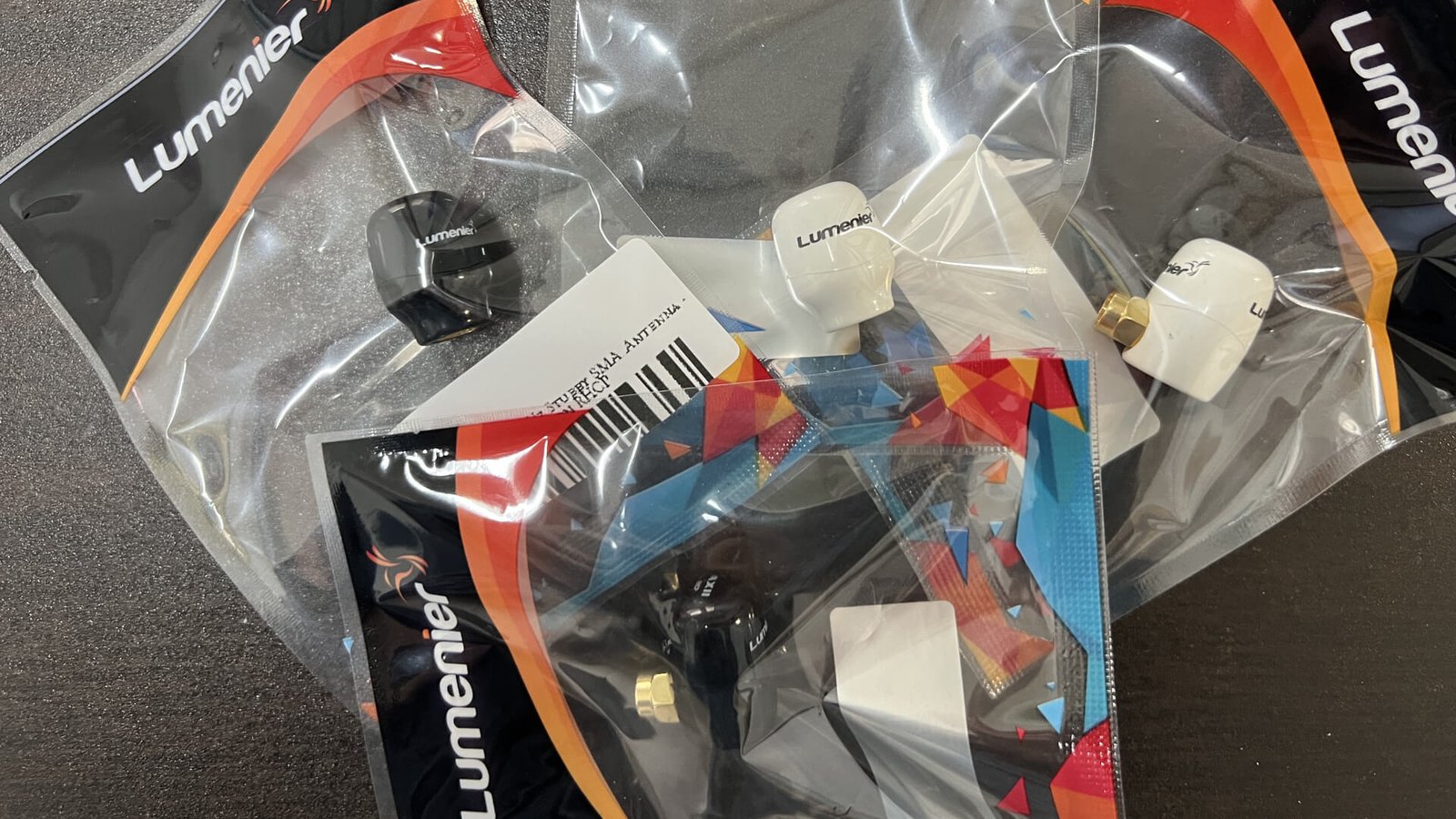
Why I Settled on Lumenier
I’ll be blunt: I was skeptical at first. When I was starting out, I bought cheap, cloned antennas in 5-packs. And I broke them in 5-packs. The signal was fine… until it wasn’t. The “Aha!” moment for me wasn’t a gradual discovery; it was a sudden one.
I’d just built my first “serious” quad and a friend, tired of watching my video feed drop, handed me his spare AXII. The difference was not subtle. It was immediate and profound.
- The penetration was better. That “one leafy tree” I mentioned? I could now fly behind the whole grove.
- The multipath rejection (that wobbly, “drunk” video you get in bando-like concrete environments) was noticeably reduced. The image just held.
- The durability was on another level.
This is where my “rigorous” side kicks in. It’s not magic; it’s engineering. Lumenier, in partnership with True-Spec, obsesses over things that most pilots don’t even know exist, like Axial Ratio.
In simple terms, Axial Ratio is a measure of an antenna’s “perfection.” A perfect antenna would have an axial ratio of 1.0. This means it’s emitting a perfectly circular polarized signal. Cheap antennas might test at 1.5, 2.0, or even worse. My experience tells me that most Lumenier AXII antennas hover impressively close to 1.0.
Why does this matter to you? A better axial ratio means your signal is less affected by the quad’s orientation. When you’re rolling, flipping, and diving, your antenna and your goggle’s antennas stay “locked.” This is the feel of a premium antenna. It’s not just range; it’s consistency.
They aren’t the cheapest. But I’ve found that buying cheap antennas is just a down payment on the better ones you’ll inevitably buy later. I now trust all my builds, from my 2-inch cinewhoops to my 7-inch long-range platforms, to lumenier fpv antennas.
RHCP vs. LHCP
Before we go a single step further, we have to address the most critical and most common mistake I see. You’ll often see a product name like “lumenier axii 5.8ghz 90 mmcx fpv antenna rhcp or lhcp.”
Those last four letters are not a suggestion. They are the most important spec on the page.
- RHCP = Right-Hand Circular Polarized
- LHCP = Left-Hand Circular Polarized
Here is my simple, non-technical explanation: Imagine your antenna is “throwing” the video signal like a football with a perfect spiral. Your goggle antenna has to “catch” it by spiraling its “hands” in the same direction.
- If you have an RHCP antenna on your quad, you must have an RHCP antenna on your goggles.
- If you have an LHCP antenna on your quad, you must have an LHCP antenna on your goggles.
What happens if you mix them? You will get catastrophic signal loss. We’re talking 20-30dB of loss, which in FPV terms, means your 2-mile quad now has a range of about 10 feet.
The AXII 2 Workhorse Family
When most people think of a lumenier axii 5.8ghz fpv antenna, they’re thinking of some version of the AXII 2. This is the gold standard for a reason. It’s the one that lives on 90% of my 5-inch freestyle quads. But “AXII 2” isn’t one product.
My Pick: The AXII 2 Stubby (SMA or MMCX)
This is it. This is my bread and butter. For freestyle, I’ve moved almost exclusively to stubby antennas.
- Why? Durability. Plain and simple. On a 5-inch build, a long antenna stem is just a lever, waiting to be snapped off in a crash or snagged by a gate. The stubby design keeps the “business end” of the antenna—the active element—protected, close to the frame, and out of harm’s way.
- Performance: The signal quality is identical to its long-stemmed brother, with the caveat that you must mount it properly. If you bury a stubby deep inside a carbon frame, you’re shielding its signal. It needs a clear line of sight.
- My Experience: The penetration I get from this little antenna is still best-in-class. When I’m weaving through a bando, the image just holds in situations that would have turned my old, cheap antennas into pure static. It’s a feeling of confidence.
For Micros: The AXII 2 U.FL
On my cinewhoops and micro-builds, weight and space are everything. The AXII 2 U.FL is a marvel. It’s the full-power AXII 2 element, but it connects directly to the VTx with a tiny, feather-light U.FL connector.
The Bando-Basher’s Best Friend: The 90-Degree
There are some builds where durability isn’t just a “nice to have,” it’s the entire point. For my “bando” quads—the ones I know I’m going to smash into concrete—I use a very specific setup.
This is where the lumenier axii 5.8ghz 90 mmcx fpv antenna rhcp or lhcp model shines.
The genius of this antenna is twofold:
- The 90-Degree Bend: This is not just a pre-bent cable. The rigid 90-degree housing is designed for installation. It lets you mount the antenna horizontally, coming straight off the VTx, and point the active element vertically. This creates an incredibly clean, low-profile setup that is almost impossible to snag or break.
- The MMCX Connector: On my most abusive builds, I now prefer MMCX over SMA. An SMA connector is rigid. In a hard crash, it transfers all the force directly to the VTx, often ripping the connector off the board. An MMCX connector, on the other hand, is designed to pop off in a severe impact. I would much rather pop my antenna back on than have to re-solder a VTx.
This isn’t an antenna for long-range. This is an antenna for survival. When I’m deep in an abandoned building, I’m not worried about range; I’m worried about signal reflection (multipath) and crash-proofing my gear. This antenna is my solution for both.
Pushing the Horizon: My “Lumenier FPV Antenna Long Distance” System
Now we’re talking about a completely different style of flying. For long-range, “stubby” and “low-profile” are no longer the priorities. The new priorities are Gain and Diversity.
This is crucial: My long-range setup is a system. The antenna on the quad is only half the equation. The other, more important half is on my goggles.
On My Goggles: The “Patch & Omni” Diversity Setup
I never fly long-range without a diversity receiver. On one antenna port, I have a standard Lumenier AXII 2 Omni antenna. This antenna “catches” the signal from all directions and is perfect for when I’m flying close to myself or, heaven forbid, behind myself.
On the other port, I have my secret weapon: a Lumenier AXII 2 Patch Antenna.
- How it Works: A patch antenna is directional. It has very high “gain” (think of it like a signal-catching “scoop”) but only in the direction it’s pointed.
- The “Feel”: When I fly out, I point my head (and thus, the patch) in the direction of my quad. The diversity system automatically switches to whichever antenna has the stronger signal. The “feel” of my receiver switching from the omni to the patch is one of clarity. The image “locks in” and the background noise just disappears.
On My Quad: The Double AXII 2 HD Long Range
This is a specialized piece of gear. The Lumenier Double AXII 2 HD is essentially two antenna elements stacked on top of each other. This “stacking” (known as a co-linear array) flattens the signal radiation pattern and boosts its gain.
- The Good: It punches its signal out far on the horizontal plane. It’s designed to talk to my patch antenna, way out on the horizon.
- The “Gotcha” (This is important!): A high-gain antenna like this has a “null” or dead-zone. Because its signal is so flat, it has very poor performance directly above and below it. This is not an antenna for freestyle. If you fly directly over your head with this antenna, your signal will disappear. But for a 7-inch “mountain surfer” that will always be “out in front” of me, it is the absolute king.
My “lumenier fpv antenna long distance” setup is, therefore, a Double AXII 2 on the quad, paired with a Patch and Omni AXII 2 on my goggles. This system gives me the confidence to push out to miles, knowing my link is as robust as it can possibly be.
My Final Verdict
I know that was a lot of information. The 1-minute read-time crowd is long gone. But you’re still here, which means you’re serious. So, let’s make this simple. Here is my “cheat sheet” for building your perfect antenna loadout.
If you are a 5-inch Freestyle Pilot:
- On your Quad: Lumenier AXII 2 Stubby (SMA or MMCX). It’s the perfect blend of performance and “crash-proof-ness.”
- On your Goggles: Two Lumenier AXII 2 omni-directional antennas. This is my daily-driver setup.
If you are a Micro/Cinewhoop Pilot:
- On your Quad: Lumenier AXII 2 U.FL. The lightweight, no-compromise performance is unmatched. Just be gentle installing it.
- On your Goggles: Your standard dual AXII 2 setup is perfect.
If you are a Long-Range Explorer:
- On your Quad: Lumenier Double AXII 2 HD. But only if you understand the “no-fly-overhead” limitation.
- On your Goggles: A diversity receiver with one Lumenier AXII 2 Patch and one Lumenier AXII 2 Omni. This is the key.
If you are a Bando-Basher or Racer:
- On your Quad: Lumenier AXII 5.8GHz 90-Degree MMCX. Pick RHCP or LHCP and match it to your goggles. This thing is built to be abused.
- On your Goggles: A pair of standard AXII 2s, or for extreme bando penetration, a high-gain omni like the Lumenier “Stubby” Singularity.
If you are a DJI O3 (Digital) Pilot:
- On your Quad: Lumenier AXII Duality HD 2.4/5.8GHz. Don’t even think about it. Just do it. This is the single best upgrade for your O3.
- On your Goggles: Your stock DJI antennas are a great place to start, but upgrading to the Lumenier AXII HD 2 Patch Antennas for the Goggles 2/Integra is a phenomenal range-booster.
My trust in lumenier fpv antennas isn’t just brand loyalty. It was earned. It was earned every time I flew out of a concrete parking garage and held signal. It was earned every time I clipped a branch and didn’t snap my antenna. And it’s earned every time I fly a new build and am just impressed by the clarity of the image.